← Back to Dashboard
6 eras9 chapters95 events

Worcester History

Three centuries of stories from the Heart of the Commonwealth — from Nipmuc territory to the Renaissance city.

Ask the Worcester KB

Ask anything about Worcester →

Cross-domain Q&A

Ask anything about Worcester

→

Gallery

Image Gallery

318 curated images from Digital Commonwealth — every one filtered to records flagged no known copyright restrictions. Tap any image for a full-size view; use ← / → to navigate.

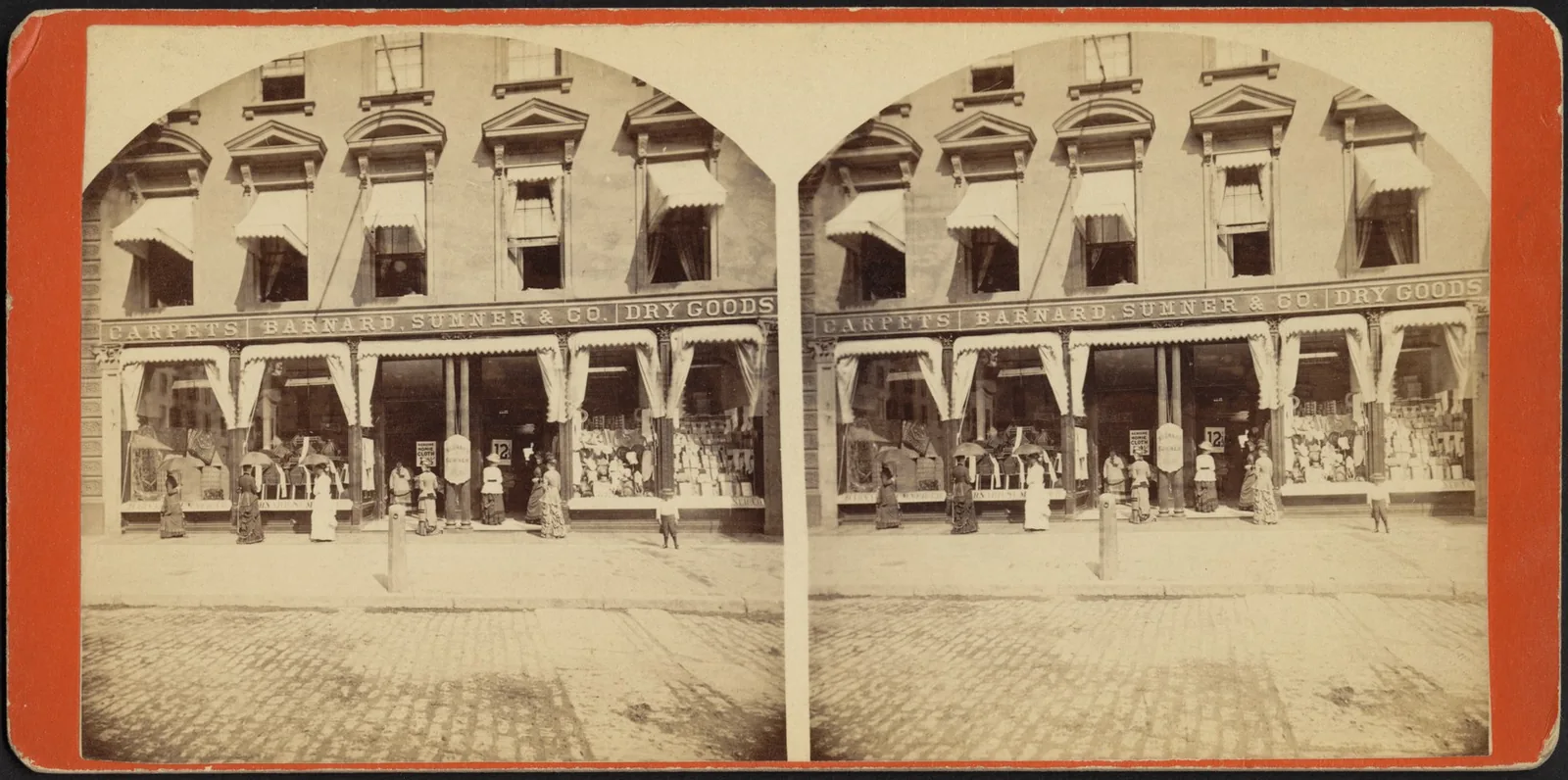
Worcester Street· [ca. 1862–1888]

Boston Public Library—No known copyright restrictions.↗

Contract No. 54, Highway in Towns of Dana, Petersham, Worcester County, placing tar at intersection at Sta. 20+, Dana and Petersham, Mass., Sep. 24, 1936· September 24, 1936

Massachusetts Archives—No known copyright restrictions.↗

Boston City Hall· [1969–1970]

Boston Public Library—No known copyright restrictions.↗

Music of the Union· (c) 1861

Boston Public Library—No known copyright restrictions.↗

Jenny Lind music· [ca. 1845–1851]

Boston Public Library—No known copyright restrictions.↗

Centennial music· (c) 1876

Boston Public Library—No known copyright restrictions.↗

Taft Memorial Church· 1915

Uxbridge Historical Society—No known copyright restrictions.↗

Massachusetts WPA Art Project exhibit, Boston Conservatory of Music, current thru "This Work Pays Your Community Week"· [1940]

Boston Public Library—No known copyright restrictions.↗

Sudbury Reservoir, real estate, Joseph Burnett, house, Southborough, Mass., ca. 1893· [ca. 1893]

Massachusetts Archives—No known copyright restrictions.↗

Boston City Hall· August 1953

Boston Public Library—No known copyright restrictions.↗

Boston City Hall· 1969

Boston Public Library—No known copyright restrictions.↗

W. C. Jennison, florist, Worcester Rd (Rte. 9)· [1860–1999]

Morse Institute Library—No known copyright restrictions.↗

Wilkinson Hall (library), State A. & M. College, Orangeburg, S. C.· [ca. 1930–1945]

Boston Public Library—No known copyright restrictions.↗

Thayer Memorial Library· 1907

Uxbridge Historical Society—No known copyright restrictions.↗

Edward Winslow indentured to apprentice with Levi Lincoln of Worcester, 14 November 1782· November 14, 1782

Boston Public Library—No known copyright restrictions.↗

Contract No. 54, Highway in Towns of Dana, Petersham, Worcester County, washout in Dana-Petersham highway, looking back from Sta. 76+30, Dana and Petersham, Mass., Sep. 28, 1938· September 28, 1938

Massachusetts Archives—No known copyright restrictions.↗

Mary Waginor indentured to apprentice with Samuel Salisbury of Boston/Worcester, 21 March 1778· March 21, 1778

Boston Public Library—No known copyright restrictions.↗

Lucy Stone· [ca. 1878–1893]

Boston Public Library—No known copyright restrictions.↗

Dad's Diner· [ca. 1980]

Uxbridge Historical Society—No known copyright restrictions.↗

Community hall and library, Rutland, Mass.· [ca. 1930–1945]

Boston Public Library—No known copyright restrictions.↗

Hebert's Candy Mansion, Route 20, Shrewsbury, Mass.· [ca. 1930–1945]

Boston Public Library—No known copyright restrictions.↗

The Hebert Candy Mansion. Route 20, Shrewsbury, Mass.· [ca. 1930–1945]

Boston Public Library—No known copyright restrictions.↗

Morgan Memorial Community Camp, South Athol, Mass.· [ca. 1930–1945]

Boston Public Library—No known copyright restrictions.↗

Anthony Haswell indentured to apprentice with Isaiah Thomas of Boston, 23 July 1771· July 23, 1771

Boston Public Library—No known copyright restrictions.↗
Page 1 of 14

Explore the full history

6 eras · 9 thematic chapters · 95 dated events

Nipmuc Lands · 1600–1669

Central Massachusetts before English settlement was Nippenet — 'the freshwater pond place' — homeland of the Nipmuc people, an Eastern Algonquian-speaking nation whose territory included what would become Worcester. The era closes with the establishment of the Common in 1669 and English settlement, displacement, and the catastrophe of King Philip's War.

Colonial Settlement · 1669–1775

From the establishment of the Common through the eve of the Revolution. English settlers establish a town (1722), Worcester becomes the county seat (1731), and the publishing trade arrives with the relocation of the Massachusetts Spy (1775), positioning Worcester as a printing center and a Revolutionary-era town of consequence.

Federal / Early Republic · 1776–1827

Worcester in the early American republic — Isaiah Thomas reads the Declaration on July 14, 1776; the American Antiquarian Society is founded in 1812; libraries, lyceums, and newspapers multiply. Worcester becomes a center of New England print culture and civic learning before the canal-and-rail transformation.

Industrial Revolution · 1828–1900

From the Blackstone Canal (1828) and the Boston-Worcester Railroad (1835) through the city charter (1848), the rise of wire, abrasives, looms, and corsets, the founding of the colleges and the Art Museum (1898), the National Women's Rights Convention (1850), and immigration waves from Ireland, Quebec, Germany, Sweden, Lithuania, Poland, Italy, Greece, Turkey, Armenia, and Syria. Worcester becomes the Heart of the Commonwealth.

20th Century · 1901–1999

Manufacturing peak gives way to mid-century decline and urban renewal. The 1953 tornado kills 94; Harvey Ball draws a smiley face in 1963; the colleges and Catholic Diocese expand; Mechanics Hall is saved (1977); the Centrum opens (1982); the Cold Storage fire (1999) claims six firefighters and crystallizes modern civic memory.

Renaissance · 2000–today

Higher education, medicine, and biotech drive a population renaissance — Worcester reaches its all-time high in the 2020 census, 22% foreign-born, with major Vietnamese, Brazilian, Albanian, Puerto Rican, Ghanaian, and Dominican communities reshaping the city. Union Station is renovated, the Railers and WooSox arrive, and the city continues to grow.

Chapter

Building a Future on the Feats of the Past

Worcester's relationship with its own history is itself a Worcester story. The American Antiquarian Society (founded 1812 by Isaiah Thomas) built one of the world's deepest collections of early American print here a generation before Worcester became a city. The Worcester Society of Antiquity (1875) grew into the Worcester Historical Museum, rebranded the Museum of Worcester. The Worcester Art Museum (1898) absorbed the Higgins Armory collection in 2013, preserving a world-class arms-and-armor archive that would otherwise have dispersed. Mechanics Hall, threatened with urban-renewal demolition, was saved by a $5M community fundraise in 1977 — a turning point that arrested Worcester's downtown decline. The pattern is consistent: when institutional memory is at risk, Worcesterites have repeatedly chosen to preserve, restore, and re-curate rather than replace. The Tercentennial book is itself the latest example.

Figures

W

No known image

Wawaus (James the Printer)

Nipmuc co-printer of the Eliot Indian Bible

Isaiah Thomas — Revolutionary printer, founder of the American Antiquarian Society

Isaiah Thomas1749–1831

Revolutionary printer, founder of the American Antiquarian Society

Stephen Salisbury I — Merchant who built Salisbury Mansion (1772)

Stephen Salisbury I1746–1829

Merchant who built Salisbury Mansion (1772)

Stephen Salisbury III — Worcester Art Museum founder

Stephen Salisbury III1835–1905

Worcester Art Museum founder

Jonas Gilman Clark — Founder of Clark University

Jonas Gilman Clark1815–1900

Founder of Clark University

George Bancroft — Historian, U.S. Navy Secretary, founder of the U.S. Naval Academy

George Bancroft1800–1891

Historian, U.S. Navy Secretary, founder of the U.S. Naval Academy

John Woodman Higgins — Industrialist and Higgins Armory Museum founder

John Woodman Higgins1874–1961

Industrialist and Higgins Armory Museum founder

Landmarks

Related Events

  • 1812American Antiquarian Society founded
  • 1875Worcester Society of Antiquity formed
  • 1884Worcester bicentennial
  • 1898Worcester Art Museum opens
  • 1977Mechanics Hall saved + restored
  • 1988Worcester Historical Museum opens on Elm Street
  • 2013Higgins Armory Museum closes; collection absorbed by Worcester Art Museum

Read more at the Museum of Worcester→

Chapter

Building Community

Worcester has been built and rebuilt by waves of newcomers. Irish, French-Canadian, German, Swedish, and Lithuanian arrivals filled Worcester's three-decker neighborhoods in the mid-19th century; Italians, Greeks, Armenians, Poles, and Syrians joined in the decades after. The Catholic Diocese of Worcester (1950) recognized the demographic transformation. Today, 22% of Worcester's residents were born outside the United States, with significant Vietnamese, Brazilian, Albanian, Puerto Rican, Ghanaian, and Dominican communities reshaping the city's social fabric. Civic infrastructure followed the people: the YMCA (1852), the Worcester Regional Transit Authority (1974), and a school system that now teaches in dozens of home languages. Community in Worcester is plural by design — a thousand small institutions, each rooted in a neighborhood, each holding the city together.

Figures

M

No known image

Metacomet (King Philip)d. 1676

Wampanoag sachem who led the 1675 war

John Acquittamaug — Nipmuc figure of first recorded contact (1630)

John Acquittamaug

Nipmuc figure of first recorded contact (1630)

Levi Lincoln Jr. — First mayor of Worcester (1848), Massachusetts Governor

Levi Lincoln Jr.1782–1868

First mayor of Worcester (1848), Massachusetts Governor

Lucy Stone — Abolitionist and women's rights organizer

Lucy Stone1818–1893

Abolitionist and women's rights organizer

The Worcester 6 — Firefighters killed in the 1999 Cold Storage fire

The Worcester 6

Firefighters killed in the 1999 Cold Storage fire

Abbie Hoffman — Yippie activist and counterculture leader (born Worcester)

Abbie Hoffman1936–1989

Yippie activist and counterculture leader (born Worcester)

Jordan Levy — Mayor (1988-1993), radio host

Jordan Levy

Mayor (1988-1993), radio host

Tim Murray — Mayor (2002-2007), Lt. Governor of Massachusetts (2007-2013)

Tim Murrayb. 1968

Mayor (2002-2007), Lt. Governor of Massachusetts (2007-2013)

Jim McGovern — U.S. Representative for MA-3 / MA-2 (1997-present)

Jim McGovernb. 1959

U.S. Representative for MA-3 / MA-2 (1997-present)

Joseph D. Early — U.S. Representative for MA-3 (1975-1993)

Joseph D. Early1933–2012

U.S. Representative for MA-3 (1975-1993)

Landmarks

Related Events

  • 1834St. John's Catholic Church established
  • 1850National Women's Rights Convention held in Worcester
  • 1852Worcester YMCA founded
  • 1900Population reaches 118,421; Bancroft Tower erected
  • 1950Roman Catholic Diocese of Worcester established
  • 1974Worcester Regional Transit Authority established
  • 2024Worcester's foreign-born population reaches 22%

Read more at the Museum of Worcester→

Chapter

Heart of the Commonwealth

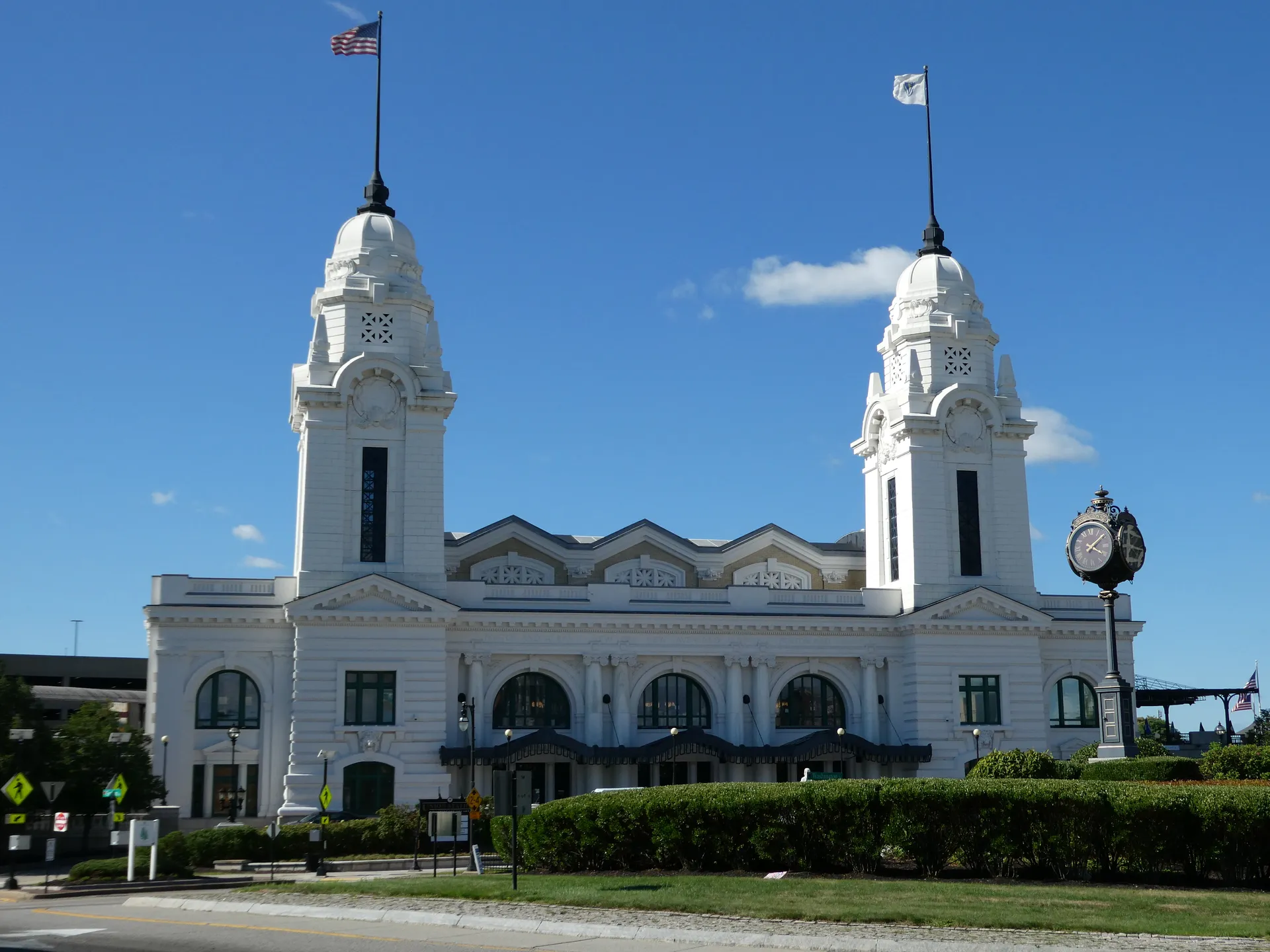
Worcester's city seal, adopted in 1849, carries the motto 'Heart of the Commonwealth' — reflecting geography and ambition in equal measure. The city sits at the geographic center of Massachusetts and the crossroads of New England, a position formalized when Worcester became the county seat in 1731 and again when it incorporated as a city in 1848. The first town meeting house (1719), Town Hall (1824), City Hall (1898), and the Beaux-Arts Union Station (rebuilt 1911, renovated 2000) are the architectural record of that civic confidence. Interstate 190 (1983) and the modern WRTA bus network bind Worcester to the surrounding region. The 'Heart of the Commonwealth' tagline persists 300 years after the town's founding because it remains literally true.

Figures

Stephen Salisbury I — Merchant who built Salisbury Mansion (1772)

Stephen Salisbury I1746–1829

Merchant who built Salisbury Mansion (1772)

Levi Lincoln Jr. — First mayor of Worcester (1848), Massachusetts Governor

Levi Lincoln Jr.1782–1868

First mayor of Worcester (1848), Massachusetts Governor

George Frisbie Hoar — Worcester U.S. Senator (1877-1904)

George Frisbie Hoar1826–1904

Worcester U.S. Senator (1877-1904)

Stephen C. Earle — Worcester architect of the Worcester Art Museum building

Stephen C. Earle1839–1913

Worcester architect of the Worcester Art Museum building

The Worcester 6 — Firefighters killed in the 1999 Cold Storage fire

The Worcester 6

Firefighters killed in the 1999 Cold Storage fire

Jordan Levy — Mayor (1988-1993), radio host

Jordan Levy

Mayor (1988-1993), radio host

Raymond Mariano — Mayor (1994-2001)

Raymond Mariano

Mayor (1994-2001)

Tim Murray — Mayor (2002-2007), Lt. Governor of Massachusetts (2007-2013)

Tim Murrayb. 1968

Mayor (2002-2007), Lt. Governor of Massachusetts (2007-2013)

Joseph Petty — Mayor of Worcester (2012-present)

Joseph Petty

Mayor of Worcester (2012-present)

Jim McGovern — U.S. Representative for MA-3 / MA-2 (1997-present)

Jim McGovernb. 1959

U.S. Representative for MA-3 / MA-2 (1997-present)

Joseph D. Early — U.S. Representative for MA-3 (1975-1993)

Joseph D. Early1933–2012

U.S. Representative for MA-3 (1975-1993)

Landmarks

Related Events

  • 1722Worcester incorporated as a town
  • 1731Worcester becomes county seat of Worcester County
  • 1733Court House built
  • 1824Town Hall built
  • 1848Worcester becomes a City
  • 1849Worcester city seal adopted with 'Heart of the Commonwealth' motto
  • 1898Worcester City Hall built
  • 1911Union Station rebuilt
  • 1983Interstate 190 opens
  • 2000Union Station renovated; MCPHS campus opens

Read more at the Museum of Worcester→

Chapter

How We Learned

Worcester is one of the most college-dense small cities in the United States. The publishing trade arrived first — Isaiah Thomas's Massachusetts Spy in 1775 and Worcester Magazine in 1786 made the town a center of New England print culture before higher education ever did. Then came the colleges: Holy Cross (1843), the Free Public Library (1862), Worcester Polytechnic Institute (1865), Worcester State University (1874), Clark University (1887, where Sigmund Freud gave his only U.S. lectures in 1909), and Worcester Art Museum (1898). The 20th century added Assumption (1904), UMass Medical School (1962), Quinsigamond Community College (1963), and MCPHS (2000). The Worcester Consortium of Universities (1968) coordinates the system. Today eight colleges and universities, plus the AAS research library, make Worcester a place where learning is industry.

Figures

W

No known image

Wawaus (James the Printer)

Nipmuc co-printer of the Eliot Indian Bible

John Eliot — Puritan missionary and translator of the Eliot Indian Bible

John Eliot1604–1690

Puritan missionary and translator of the Eliot Indian Bible

Isaiah Thomas — Revolutionary printer, founder of the American Antiquarian Society

Isaiah Thomas1749–1831

Revolutionary printer, founder of the American Antiquarian Society

Ichabod Washburn — Wire-manufacturing industrialist (Washburn & Moen)

Ichabod Washburn1798–1868

Wire-manufacturing industrialist (Washburn & Moen)

Jonas Gilman Clark — Founder of Clark University

Jonas Gilman Clark1815–1900

Founder of Clark University

George Bancroft — Historian, U.S. Navy Secretary, founder of the U.S. Naval Academy

George Bancroft1800–1891

Historian, U.S. Navy Secretary, founder of the U.S. Naval Academy

George Frisbie Hoar — Worcester U.S. Senator (1877-1904)

George Frisbie Hoar1826–1904

Worcester U.S. Senator (1877-1904)

Esther Forbes — Pulitzer Prize-winning Worcester author

Esther Forbes1891–1967

Pulitzer Prize-winning Worcester author

Robert H. Goddard — Father of modern rocketry

Robert H. Goddard1882–1945

Father of modern rocketry

Landmarks

Related Events

  • 1786Worcester Magazine begins publication
  • 1812American Antiquarian Society founded
  • 1843College of the Holy Cross established
  • 1862Free Public Library building constructed
  • 1865Worcester County Free Institute of Industrial Science (WPI) founded
  • 1874Worcester Normal School established (Worcester State University)
  • 1887Clark University founded
  • 1909Sigmund Freud lectures at Clark University
  • 1962University of Massachusetts Medical School established
  • 1963Quinsigamond Community College founded
  • 1968Worcester Consortium of Universities founded
  • 2000Union Station renovated; MCPHS campus opens

Read more at the Museum of Worcester→

Chapter

Making a Living

The Blackstone Canal (1828) and the Boston-Worcester Railroad (1835) transformed Worcester from an inland farming town into one of New England's great industrial cities. Wire (Washburn & Moen, founded 1831 — the largest wire manufacturer in the United States), abrasives (Norton Company), looms, machine tools, and corsets (the Royal Worcester Corset Company was the largest employer of women in the United States in 1908) made Worcester synonymous with industrial production. Worcester Lunch Car (1906) prefabricated the diners that defined mid-century American roadside dining; Miss Worcester Diner is still serving. President Taft came to Mechanics Hall in 1910 to address labor leaders. Mid-20th-century deindustrialization hurt the city deeply, but the modern Worcester economy — biotech, healthcare, higher education, and the Canal District anchored by Polar Park (2021) — is again growing employment after decades of decline.

Figures

Ichabod Washburn — Wire-manufacturing industrialist (Washburn & Moen)

Ichabod Washburn1798–1868

Wire-manufacturing industrialist (Washburn & Moen)

John Woodman Higgins — Industrialist and Higgins Armory Museum founder

John Woodman Higgins1874–1961

Industrialist and Higgins Armory Museum founder

HR

Harvey Ross Ball1921–2001

Worcester graphic designer of the Smiley face

Tim Murray — Mayor (2002-2007), Lt. Governor of Massachusetts (2007-2013)

Tim Murrayb. 1968

Mayor (2002-2007), Lt. Governor of Massachusetts (2007-2013)

Larry Lucchino — Worcester Red Sox principal owner

Larry Lucchino1945–2024

Worcester Red Sox principal owner

Landmarks

Related Events

  • 1828Blackstone Canal opens
  • 1831Washburn & Moen wire company founded
  • 1835Boston and Worcester Railroad opens
  • 1906Worcester Lunch Car Manufacturing Company founded
  • 1908Royal Worcester Corset Co. is largest U.S. employer of women
  • 1910President Taft visits Mechanics Hall
  • 2021Worcester Red Sox debut at Polar Park

Read more at the Museum of Worcester→

Chapter

Sports and Entertainment

The first perfect game in Major League Baseball history was thrown in Worcester — Lee Richmond of the Worcester Worcesters, June 12, 1880. The Worcester franchise itself lasted only three years, but the perfect game permanently fixed the city in baseball record books. Worcester's Music Festival (founded 1858) is one of the oldest continuous music festivals in the United States. Fitton Field (1924) and Foley Stadium (1927) anchored college and high-school sport for the 20th century. The Worcester Centrum / DCU Center (1982) brought professional hockey and arena concerts; the IceCats (1994), Sharks (1996), and now the Railers (2017) have all called the building home. The Massachusetts Pirates (2018) added indoor football. The crown jewel of Worcester's 21st-century sports renaissance is Polar Park (2021), home of the Worcester Red Sox, anchoring a $250M Canal District redevelopment.

Figures

Lee Richmond — Pitcher of the first MLB perfect game (1880)

Lee Richmond1857–1929

Pitcher of the first MLB perfect game (1880)

Larry Lucchino — Worcester Red Sox principal owner

Larry Lucchino1945–2024

Worcester Red Sox principal owner

Landmarks

Related Events

  • 1858Worcester Music Festival begins
  • 1880Lee Richmond pitches first MLB perfect game
  • 1924Fitton Field stadium opens
  • 1982Worcester Centrum arena opens
  • 1994Worcester IceCats AHL hockey debut; Women's History Project founded
  • 2017Worcester Railers ECHL hockey founded
  • 2018Massachusetts Pirates indoor football team formed
  • 2021Worcester Red Sox debut at Polar Park

Read more at the Museum of Worcester→

Chapter

The Arts in Worcester

Mechanics Hall (1857) is ranked among the top concert halls in North America. Its acoustics carried the voices of Charles Dickens, Susan B. Anthony, Enrico Caruso, Ella Fitzgerald, Yo-Yo Ma, and Mel Tormé across 170 years; its 1864 Hook Organ remains the oldest unaltered four-keyboard pipe organ at its original installation site in the Western Hemisphere. The Worcester Art Museum (1898) holds 38,000 works spanning antiquity to the present, including a Roman mosaic floor and (since 2013) the absorbed Higgins Armory collection. The Worcester Music Festival has run since 1858. When Mechanics Hall faced urban-renewal demolition in the 1970s, the community raised $5 million to save and restore it — a decision widely credited with halting Worcester's downtown decline and inaugurating the city's slow renaissance.

Figures

Stephen Salisbury I — Merchant who built Salisbury Mansion (1772)

Stephen Salisbury I1746–1829

Merchant who built Salisbury Mansion (1772)

Ichabod Washburn — Wire-manufacturing industrialist (Washburn & Moen)

Ichabod Washburn1798–1868

Wire-manufacturing industrialist (Washburn & Moen)

Stephen Salisbury III — Worcester Art Museum founder

Stephen Salisbury III1835–1905

Worcester Art Museum founder

Daniel Merriman — First president of the Worcester Art Museum

Daniel Merriman

First president of the Worcester Art Museum

Stephen C. Earle — Worcester architect of the Worcester Art Museum building

Stephen C. Earle1839–1913

Worcester architect of the Worcester Art Museum building

John Woodman Higgins — Industrialist and Higgins Armory Museum founder

John Woodman Higgins1874–1961

Industrialist and Higgins Armory Museum founder

HR

Harvey Ross Ball1921–2001

Worcester graphic designer of the Smiley face

Landmarks

Related Events

  • 1857Mechanics Hall built
  • 1864Hook Organ installed at Mechanics Hall
  • 1897Worcester Art Museum School established
  • 1898Worcester Art Museum opens
  • 1931Higgins Armory Museum opens
  • 1977Mechanics Hall saved + restored

Read more at the Museum of Worcester→

Chapter

Worcester Firsts / Worcester's Influence

Worcester's outsized contributions to American life are easy to underestimate. Isaiah Thomas read the Declaration of Independence aloud on the Common on July 14, 1776 — the first public reading outside Philadelphia. The earliest known printing of the word 'baseball' came from Thomas's Worcester press in 1787. The first National Women's Rights Convention met here in 1850, drawing Lucy Stone, Frederick Douglass, Sojourner Truth, and William Lloyd Garrison. Lee Richmond pitched the first perfect game in Major League Baseball history in 1880. Robert Goddard began his pioneering rocketry work at Clark University in 1914, launching the first liquid-fueled rocket in 1926. And Harvey Ball, a Worcester graphic designer, sketched the original yellow Smiley face in 1963 — paid $45, trademarked nothing, and quietly created one of the most recognized graphic symbols in the world. The three-decker apartment house, which housed New England's immigrant industrial workforce, originated in Worcester.

Figures

M

No known image

Metacomet (King Philip)d. 1676

Wampanoag sachem who led the 1675 war

W

No known image

Wawaus (James the Printer)

Nipmuc co-printer of the Eliot Indian Bible

Isaiah Thomas — Revolutionary printer, founder of the American Antiquarian Society

Isaiah Thomas1749–1831

Revolutionary printer, founder of the American Antiquarian Society

Lucy Stone — Abolitionist and women's rights organizer

Lucy Stone1818–1893

Abolitionist and women's rights organizer

Lee Richmond — Pitcher of the first MLB perfect game (1880)

Lee Richmond1857–1929

Pitcher of the first MLB perfect game (1880)

George Bancroft — Historian, U.S. Navy Secretary, founder of the U.S. Naval Academy

George Bancroft1800–1891

Historian, U.S. Navy Secretary, founder of the U.S. Naval Academy

Esther Forbes — Pulitzer Prize-winning Worcester author

Esther Forbes1891–1967

Pulitzer Prize-winning Worcester author

Robert H. Goddard — Father of modern rocketry

Robert H. Goddard1882–1945

Father of modern rocketry

HR

Harvey Ross Ball1921–2001

Worcester graphic designer of the Smiley face

Abbie Hoffman — Yippie activist and counterculture leader (born Worcester)

Abbie Hoffman1936–1989

Yippie activist and counterculture leader (born Worcester)

Landmarks

Related Events

  • 1776Isaiah Thomas reads the Declaration of Independence
  • 1787First printing of the word 'baseball'
  • 1812American Antiquarian Society founded
  • 1850National Women's Rights Convention held in Worcester
  • 1880Lee Richmond pitches first MLB perfect game
  • 1914Robert Goddard begins rocketry work at Clark University
  • 1963Harvey Ball creates the Smiley face

Read more at the Museum of Worcester→

Chapter

Worcester Worships

Religion in Worcester has been plural and consequential since the town's first meeting house was built in 1719. The Old South Meeting House (built around 1763) hosted town meetings of consequence through the Revolutionary period. Catholic Worcester emerged with St. John's Church (1834), serving the Irish immigrants drawn to canal and railroad construction; the Cathedral of Saint Paul (1874) became the seat of the Catholic Diocese when it was elevated in 1950. Successive immigrant waves brought French-Canadian, Italian, Polish, Lithuanian, Armenian, Greek, and Syrian congregations — each with its own neighborhood church. Worcester's Jewish community founded congregations including Shaarai Torah and Temple Emanuel (1921). Today the city's mosques, temples, gurdwaras, and Buddhist meditation centers continue the pattern: every Worcester immigrant community establishes its own worship spaces, and the religious landscape becomes a map of the city's people.

Figures

John Eliot — Puritan missionary and translator of the Eliot Indian Bible

John Eliot1604–1690

Puritan missionary and translator of the Eliot Indian Bible

Daniel Merriman — First president of the Worcester Art Museum

Daniel Merriman

First president of the Worcester Art Museum

Landmarks

Related Events

  • 1719Town meeting house built
  • 1763Old South Meeting House built
  • 1834St. John's Catholic Church established
  • 1874Cathedral of Saint Paul built
  • 1950Roman Catholic Diocese of Worcester established

Read more at the Museum of Worcester→

WooPulse

The Heartbeat of the Commonwealth

Sections

  • About & Attribution
  • Civic
  • Events
  • History
  • Outdoors
  • Sports
  • Transit
  • Weather

Sources & Attribution

Built on public APIs and open data — the National Weather Service, MBTA, MLB, Library of Congress, and more.

All data sources & attribution→

© 2026 WooPulse · Worcester, MA · Heart of the Commonwealth

A CloverNight Creation→